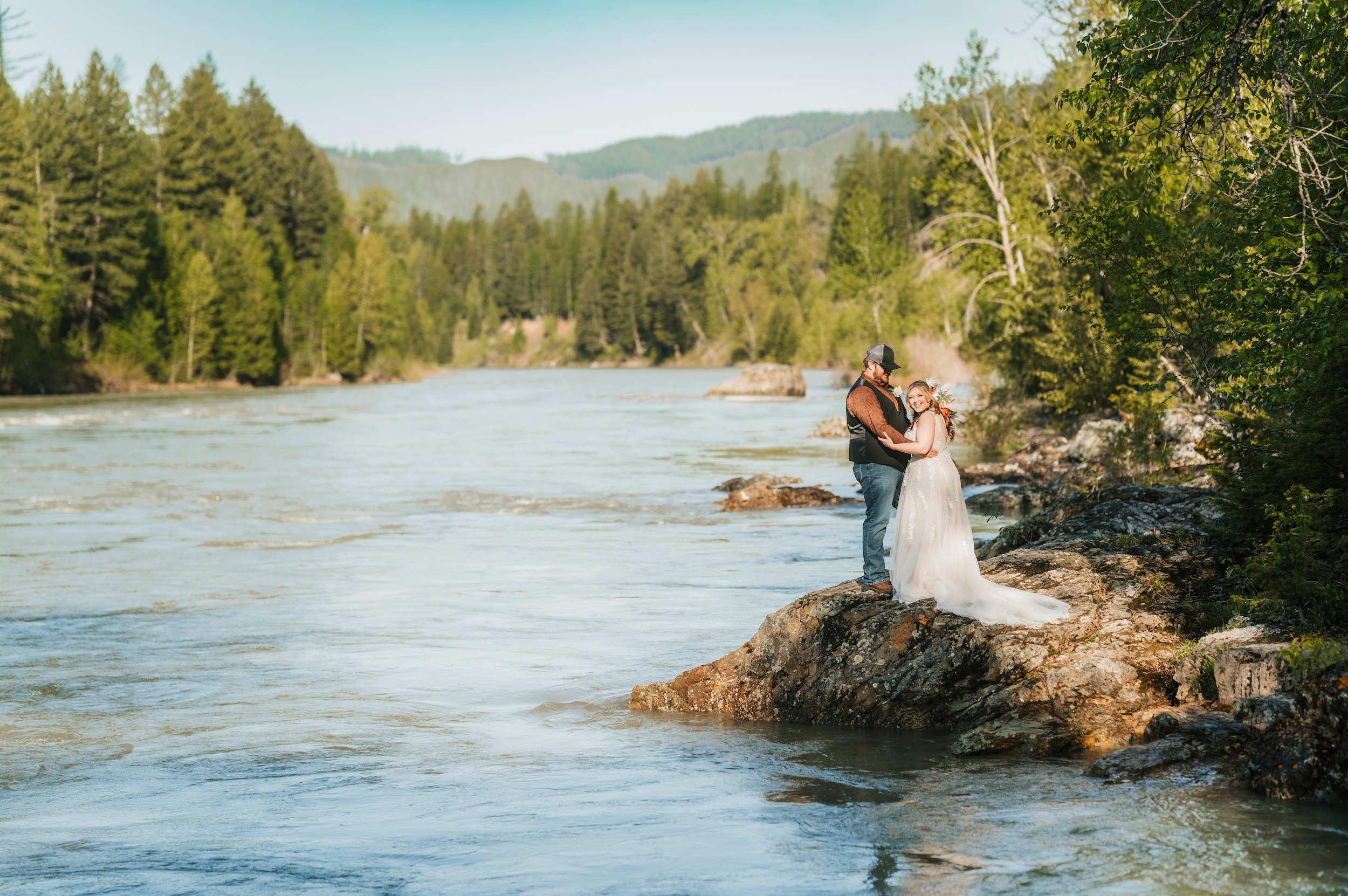
How to Plan a Eco-Friendly Elopement in Montana: Sustainable Tips for Your Glacier Wedding
Table of Contents
- Choose Local, Seasonal, and Sustainable Flowers
- Digital Invitations and Paper Alternatives
- Mindful Catering and Zero-Waste Dining
- Bring Your Own Reusable Food Container
- Celebrate with Sparkling Water Instead of Champagne
- Eco-Friendly Attire for Your Montana Wedding
- Favors for Your Guests that Celebrate Montana
- Leave No Trace & Responsible Celebration
- Offsetting Your Carbon Emissions
- Final Thought: Every Small Step Counts
Your elopement day is about love, connection, and celebrating in a way that feels true to you — and what better way to honor that than by treading lightly on the land that holds your memories? Planning a zero-waste or low-waste wedding in Montana, especially around Glacier National Park and the Flathead Valley, is not only doable but deeply rewarding. Here’s how to make your elopement beautiful, meaningful, and kind to the planet.
Choose Local, Seasonal, and Sustainable Flowers
When designing your floral arrangements for your wedding in Glacier National Park, consider what native plants are in season and try to compliment the alpine meadows with your bouquet. Skip imported blooms that travel thousands of miles and rely on heavy pesticides, and instead look for local vendors in Missoula and Kalispell who can sustainably bring your vision to life.
Use sustainably harvested wildflowers and native plants that bloom naturally in the region — this is especially important because if any petals or leaves drop during your ceremony, they’re part of the ecosystem and won’t harm the land (but please try to pick up any fallen pieces to keep the site tidy). Try to opt out of grassy greenery that might drop seeds.
Local Florists in the Glacier National Park Region
Here are some great local vendors and markets to find your dream floral bouquet:
- Two Kay’s Flower Farm – Based in Kalispell, this mother-daughter team makes wonderful bouquets for elopements
- Blue Willow Farms – Based in Stevensville, you can find this flower farm at the Clark Fork Farmers Market in Missoula on Saturdays, or you can make an appointment to come directly to the farm. They have some of the most lovely and creative flowers, always sold at a bargain.
- Kalispell Farmers Market – 9:00am-12:30pm every Saturday at Flathead Valley Community College
- Whitefish Farmers Market – 5:00-7:30pm every Tuesday at Depot Park in Downtown Whitefish.
- Lakeside Farmers Market – 9:00am-1:00pm every Saturday at Volunteer Park in Lakeside. Check out Cranky Goose Hill Farms, who has a flower farm right up the street.
Photographer’s Tip: If you’re eloping, just the two of you, in Glacier National Park, you might even skip florals altogether!
The bouquet will be gorgeous for portraits, but carrying a heavy, damp bouquet from 5-8 hours can get really cumbersome. Your photographer will give you direction and prompts throughout the day which often need your hands free, meaning you’ll be frequently setting the bouquet down or leaving it in a hot car, which will expedite the blooms wilting. If you have guests at your ceremony who are headed back to the BnB, you might kindly ask one of them to put the flowers in water so you can enjoy them when the day is winding down.
Digital Invitations and Paper Alternatives
Consider sending digital save-the-dates and invitations to eliminate paper waste and the mail carrier’s carbon footprint altogether. If you do want physical invites, consider recycled paper, native Montana seed paper (which can be planted afterward!), or cards made from sustainably sourced materials.
Mindful Catering and Zero-Waste Dining
- Choose caterers who prioritize local, organic, and seasonal ingredients, such as Montana Table.
- Consider a grazing board or buffet setup to reduce plate waste.
- Use compostable or reusable dinnerware — many venues or rental companies now offer sustainable options.
- Serving cake after “I do”? Avoid single-use plastics by bringing silverware from your BnB (just remember to bring it back!) and bring your own reusable water bottles.
Pro Tip: Ask your BnB host if they subscribe compost pickup services, or take your compost (food scraps, paper & compostable products) to Dirt Rich Compost in Whitefish at the end of your visit.
Bring Your Own Reusable Food Container
When you travel to Glacier from out of state, you’re going to be packing snacks, lunches, and going out to eat at least a few times. The ziploc bags and takeout containers will pile up in your cozy cabin BnB really fast, so look for alternatives like a watertight tupperware you can toss in the car.
I personally always travel with a reusable, watertight food storage container — I got mine at Super 1 Foods (the best “big box” grocery store in the area) for about $7 years ago, and it’s been a game-changer. It’s perfect for taking leftovers from restaurants without using single-use containers and doubles as a lunchbox on hikes or long days. A simple switch like this can make a big impact over time!
Celebrate with Sparkling Water Instead of Champagne
We all love a good champagne-pop photograph or gif, but it leaves behind sugary and smelly evidence of your celebration which can have a huge impact on an ecosystem over time. For starters, bears will always be drawn to sweets, meaning more human-bear interactions which never goes well for the bears. If champagne is a must for your special day, open it up on a durable paved surface, and be sure to fetch the cork!
Instead, consider swapping champagne for fancy sparkling water for your toast. Not only does it make for better photos, but it’s also a refreshing, eco-friendly alternative that still feels festive.
Eco-Friendly Attire for Your Montana Wedding
Choosing Sustainable Wedding Dresses
What you wear on your wedding day can be just as sustainable as it is stylish. Choosing eco-conscious attire means thinking about where your clothing comes from—and where it goes after the celebration.
Look for outfits made from natural, breathable fabrics like linen, silk, or organic cotton. These materials are gentle on the planet, easy to wash at home, and don’t require chemical-heavy dry cleaning. (Pro tip: the best way I’ve found to get trail dust out of dresses? Soaking them in a hot bathtub with original blue Dawn dish soap!)
Renting or buying secondhand is another great way to reduce your wedding footprint. Sites like StillWhite and Nearly Newlywed offer beautiful pre-loved dresses and suits. And if your outfit won’t be worn again, reselling it is a great way to pass it on—and recoup some of your investment.
As tempting as the price tags can be, try not to purchase designer imitations off Etsy, Amazon, Shien, Temu, or Ebay, as foreign factory-made goods are usually created with little regard to sustainable practices or occupational safety.
Skip the Steam—Rent Your Tux Right Here in Montana
Renting a tux is not only budget- and eco-friendly—it’s also travel-proof. Most rental shops, like Mimi’s Bridal Boutique in Kalispell, offer pressed, ready-to-wear suits so you don’t have to worry about steaming out airplane wrinkles or packing a garment bag. Just pick it up locally, slip it on, and you’re celebration-ready.
All that glitters isn’t gold…glitter is essentially just shiny microplastic, and it falls off wedding dresses like fairy dust, so please avoid dresses with glitter if possible.
Ethically Sourced Montana-Made Sapphire Jewelry
And don’t forget your jewelry. Traditional diamonds often come with a heavy social and environmental cost, but Montana offers something much more personal. Just a few hours from Glacier, you can mine your own ethical Montana sapphires in places like Philipsburg—turning them into custom wedding bands, heirloom necklaces, or engagement rings with a story that’s truly your own.
If mining your own isn’t on your itinerary, consider supporting local artisans who use hand-cut Montana sapphires in their designs. Many jewelers across the state, like Patagonian Hands and Blue Hour Metalworks, work directly with ethically sourced stones from family-run mines, creating one-of-a-kind pieces that reflect both your love and your values. Choosing Montana sapphires means celebrating with intention—rooted in place, story, and sustainability.
Favors for Your Guests that Celebrate Montana
Skip the disposable favors or plastic trinkets. If you’re reading this, you probably weren’t going to order monogramed Jordan almonds anyway…but know that there are so many wonderful gift options in Montana, from huckleberry everything (my favorite is salt water taffy) to handmade ceramics, Flathead cherry jam, and even indigenous artwork. Support our local artisans by gifting something that celebrates Montana like handmade jewelry, pottery, or edible treats, which you can pick up at one of the farmers markets listed above, or sprinkled throughout privately-owned gift shops in the area. Another option is to donate to a local conservation group, such as Wild Montana, on behalf of your guests.
Leave No Trace & Responsible Celebration
When you choose to get married in a place as wild and sacred as Glacier National Park, it’s not just about the view—it’s about the responsibility. Practicing Leave No Trace means committing to protect the land, wildlife, and water for generations to come. That starts with mindful planning and small, meaningful choices:
- Clean up all trash and recycling, or better yet, plan to produce no waste at all.
- Avoid glitter and confetti, which is just shiny microplastics.
- Bring rechargeable hand warmers for your sunrise elopement ceremony instead of disposable ones.
- Respect the land, wildlife, and regulations of Glacier National Park and tribal lands.
- Stay on marked pathways and have your wedding ceremony at an approved location. Get help with the permit process here (link coming soon)
- Admire intact wildflowers and do not pick them.
Learn more about Leave No Trace and how to ethically play outside.
Offsetting Your Carbon Emissions
Travel, especially flights and long drives, can leave a significant carbon footprint. To help balance this, consider carbon offset programs that fund renewable energy, reforestation, or community projects. Many airlines and independent organizations offer simple options to purchase offsets when booking flights, but these can often lack transparency.
If carbon offsets are on your heart, I recommend donating your those funds to directly to Western Sustainability Initiative, a Native-led organization in Montana who is actively sequestering carbon under our grasslands through their Northern Great Plains Regenerative Grazing Program.
What else can you do?
When driving through the park, you’ll likely encounter traffic. Please turn off your car when idling to reduce smog emissions within the park, as alpine environments are so sensitive and susceptible to climate change.
Carpool as often as possible, and consider if your travel plans are better suited for the free shuttle system in Glacier instead of a rental car.
The shuttles run along Going-to-the-Sun Road between Apgar Visitor Center, Logan Pass, and St. Mary Visitor Center. Shuttles typically arrive/depart every 15-30 minutes at significant pullouts within the park. Bear in mind you may have to wait at popular stops for a second shuttle, as space is limited.
Read more about Exploring Glacier National Park, in my free guide here.
Final Thought: Every Small Step Counts towards Saving our Plant
You don’t have to be perfect, but every thoughtful choice contributes to protecting the place you love most. When you plan your zero-waste elopement, you’re not just celebrating your love story — you’re honoring the earth and the generations of stories it holds. We all want this space to still be here for your ten, twenty, and fifty year anniversaries, so you can stand in wonder at these alpine meadows and incredible mountainscapes.
Ready to plan a wedding that’s both breathtaking and kind to the planet? Let’s create something beautiful together—start your eco-friendly Glacier wedding journey with me.


Be the first to comment